
Being Proactive About Your Wellness and Wellbeing

Why waiting to “feel better” is costing you more than you think

Most people don’t neglect their wellbeing on purpose. They just keep postponing it.
“I’ll sort my sleep out after this quarter.”
“I’ll train again when work settles down.”
“I’ll eat better once life is less hectic.”
The uncomfortable truth:
life doesn’t slow down on its own. If anything, the pace accelerates.
Being proactive about wellbeing isn’t about becoming a wellness fanatic. It’s about recognising that your energy, health, and emotional stability don’t self-manage. Circumstances act on you, while you chose to wait. If you don’t choose intentionally and deliberately, circumstances will choose for you.
The cost of being reactive (in real numbers)
Recent data paints a clear picture:
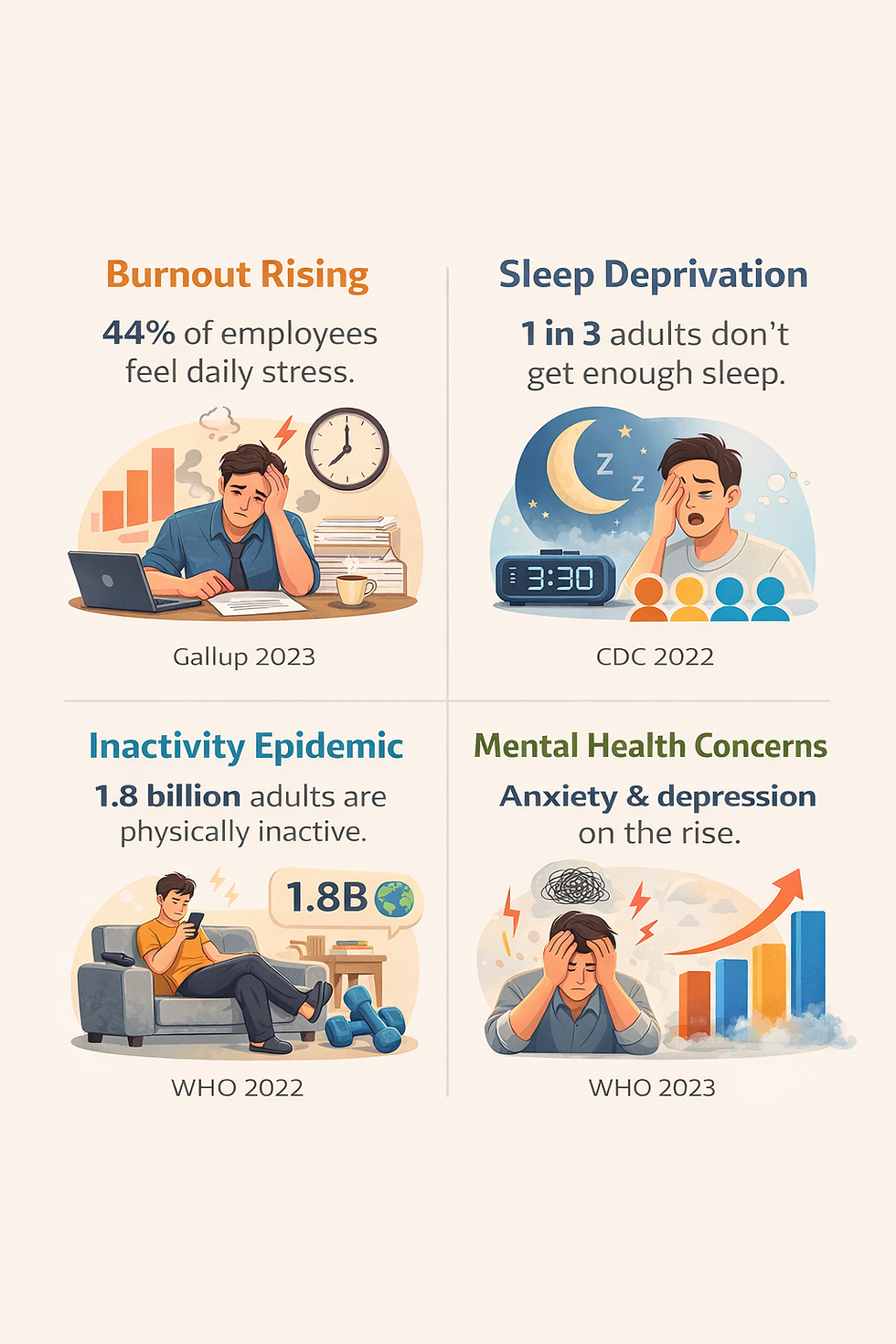
Burnout is now mainstream. Gallup’s 2023 State of the Global Workplace report found that 44% of employees experience daily stress, with wellbeing at its lowest point since 2020 (Gallup, 2023).
Sleep deprivation is chronic. The CDC reports that 1 in 3 adults consistently get insufficient sleep, a pattern strongly linked to anxiety, depression, obesity, and cardiovascular disease (CDC, 2022).
Movement has collapsed. The World Health Organization warns that nearly 1.8 billion adults globally are physically inactive, increasing risk of chronic illness and mental health challenges (WHO, 2022).
Mental health issues are rising among high-functioning adults, not just those in crisis. The WHO (2023) notes a sustained post-pandemic increase in anxiety and depressive symptoms worldwide.
None of these trends reverse themselves automatically. It will keep on acting on you, and worse, it impacts those around you.
What proactive wellbeing really looks like
Proactive wellbeing starts with a mindset shift:
“I don’t wait for breakdowns to make changes.”
It’s not about perfection. It’s about early, intentional choices that shape how you live, not just how you cope. Think of it like maintaining a car: You don’t wait for the engine to fail before checking the oil. You service it because you want it to last.
Wellbeing works the same way.

Real-world example: the high-performing trap
I see this often with senior leaders and professionals in their late 30s, 40s and 50s. When they are already committed heavily into upholding lifestyle supported by their high remuneration. The impending lost of worth, value and social standing resulting from a low work performance or from saying "Yes" to wellbeing impedes all that you have or are striving for.
On paper, life looks solid, career progress, financial stability, respected roles, living in reputable district codes, international schools for kids, the socialising with a network of people who are 'well connected". But underneath:
Sleep is fragmented
Meals are rushed, skipped or over indulged. And, the alcohol does not help.
Movement is “when there’s time”.
Relationships are undernourished (almost transactional) and easily inflamed, kids are a few steps from rebelling (or already rebelling), detached & feel under-loved.
Quiet reflection has disappeared
And honestly, these aren’t the attitudes, practices and outcomes you want when it comes to work achievements, career goals and remuneration. However, we are more liberal with the quality of our wellbeing and with the people we love. To be real, if we a buried because of poor wellness and wellbeing, it’s the loved ones who does it not our jobs or colleagues.
This is not about failing, but rather, running on yesterday’s capacity and borrowed time. The proactive shift happens when they stop asking, “How much can I push today?” and start asking,
“What kind of life am I building for the next decade?”
The science backs this approach
Research consistently shows that small, intentional lifestyle adjustments compound over time:
Just 20–30 minutes of moderate movement daily significantly reduces anxiety and depression risk (WHO, 2022).
Consistent sleep routines improve emotional regulation and decision-making within weeks, not years (Walker, 2021).
Strong social connection is now considered as critical to longevity as not smoking, according to recent public health research (Holt-Lunstad, 2020).
Proactivity isn’t dramatic. It’s directional.
A biblical perspective: stewardship, not self-obsession
From a biblical lens, proactive wellbeing isn’t about self-indulgence, rather, it’s about stewardship.
Scripture repeatedly frames the body and life as something entrusted, not owned. Would you have heightened care when you borrow a mate’s car? Or, would you drive it hard with minimal care?
“Do you not know that your body is the temple of the Holy Spirit… therefore glorify God in your body.” - 1 Corinthians 6:19–20 (NKJV)
And wisdom literature reinforces intentional living:
“The prudent foresees evil and hides himself, but the simple pass on and are punished.” - Proverbs 22:3 (NKJV)
In other words: wisdom doesn’t wait for collapse.
Looking after your sleep, nutrition, movement, emotional health, and relationships isn’t unspiritual. It’s how you remain available, present, and effective to your family, your work, and your commission.
How to start (without overhauling your life)

Here’s a grounded way forward:
Sleep: Choose a consistent wind-down time, even if total hours aren’t perfect yet.
Nutrition: Aim for regularity and nutritious options before optimisation.
Movement: Non-negotiable basics beat heroic workouts. Walk, do functional movement and stretches.
Relaxation: Build quiet time into your week, not just holidays. Say no to answering emails, chats, and the urge to check something when it is time for quiet.
Connection: Schedule people into your life the same way you schedule important meetings.
None of this requires motivation. It requires decisive action.
Wellbeing isn’t something you “get back” after life settles down.
It’s something you build while life is happening. The most sustainable form of high performance isn’t intensity, it’s intentionality. And that starts with choosing to act before your body, mind, or soul forces the issue.
What you do in your current decade, you bring into your next.


Comments